3x
Versus site average.

Comparable customer evidence
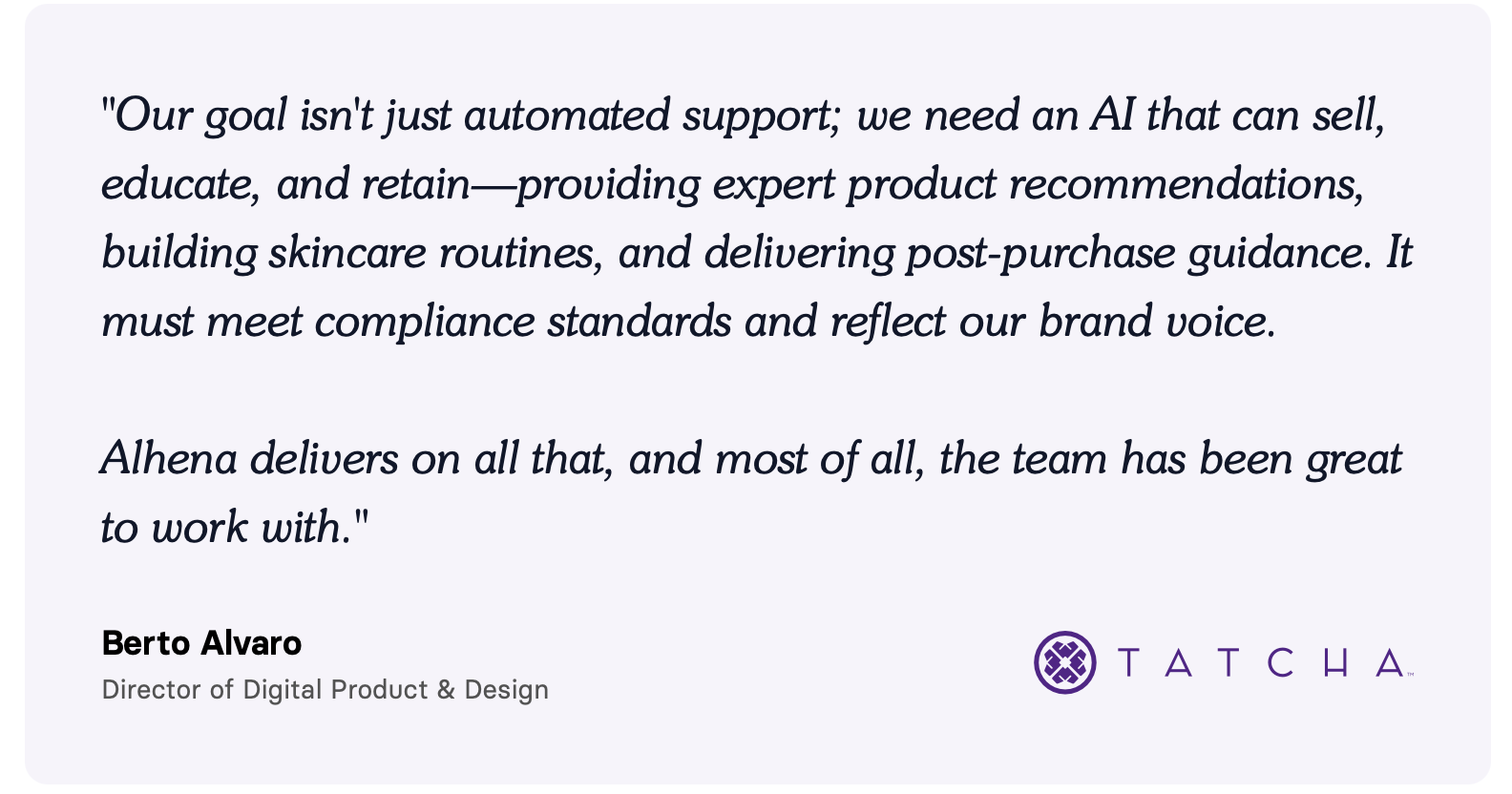
Alhena's TATCHA case study is relevant because it connects AI-assisted product discovery to measurable commerce outcomes while keeping brand voice, policy guardrails, and human escalation intact.
TATCHA's outcomes are evidence that the operating pattern can work, not a forecast of Dermalogica performance.
3x
Versus site average.
+38%
Average order value lift.
11.4%
Influenced by the assistant.
81%
With 82% chat deflection.
82%
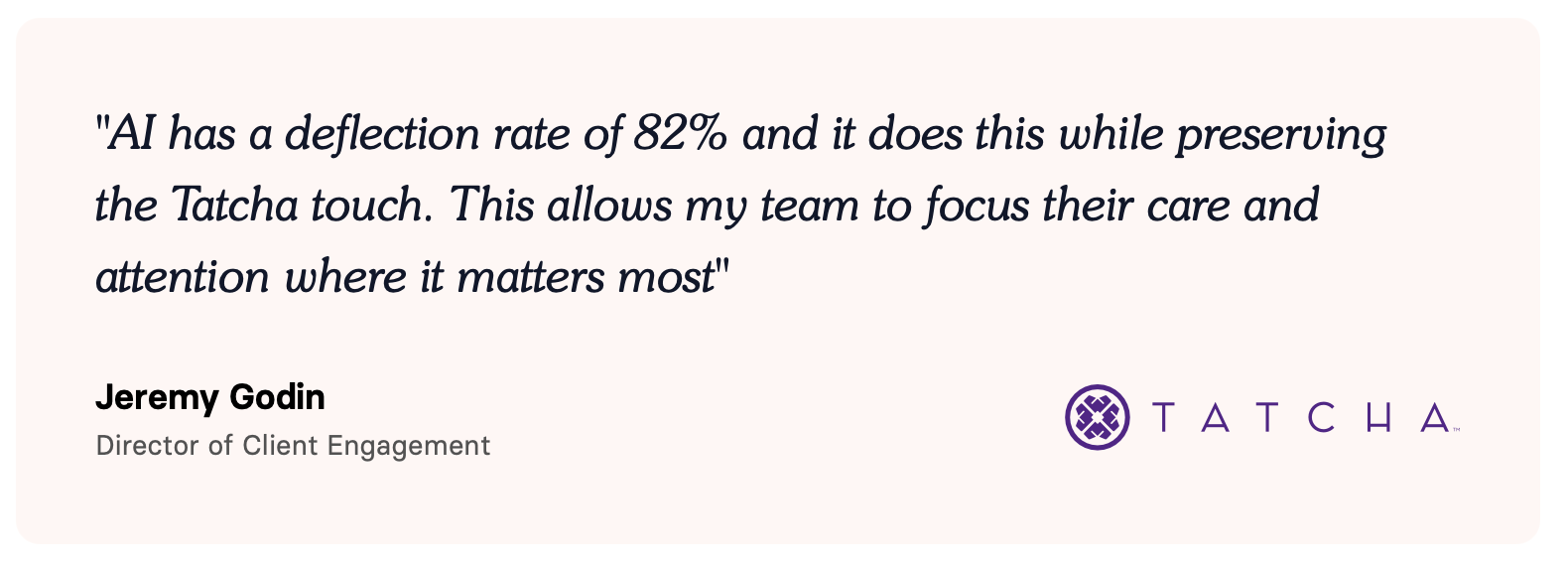
Chat deflection while preserving human escalation.
Brand and policy
Governed tone, knowledge, and escalation boundaries.
Experience pattern
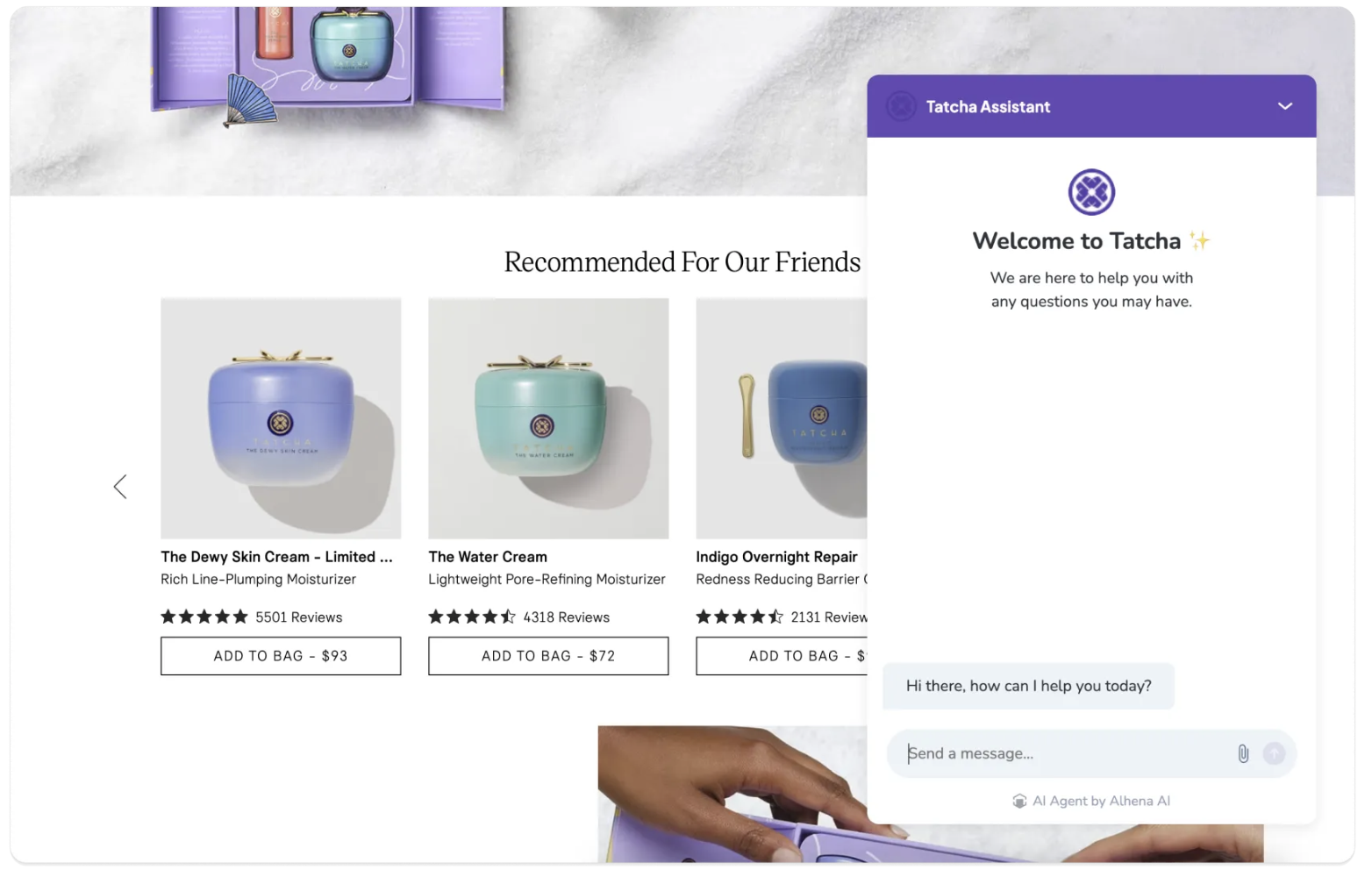
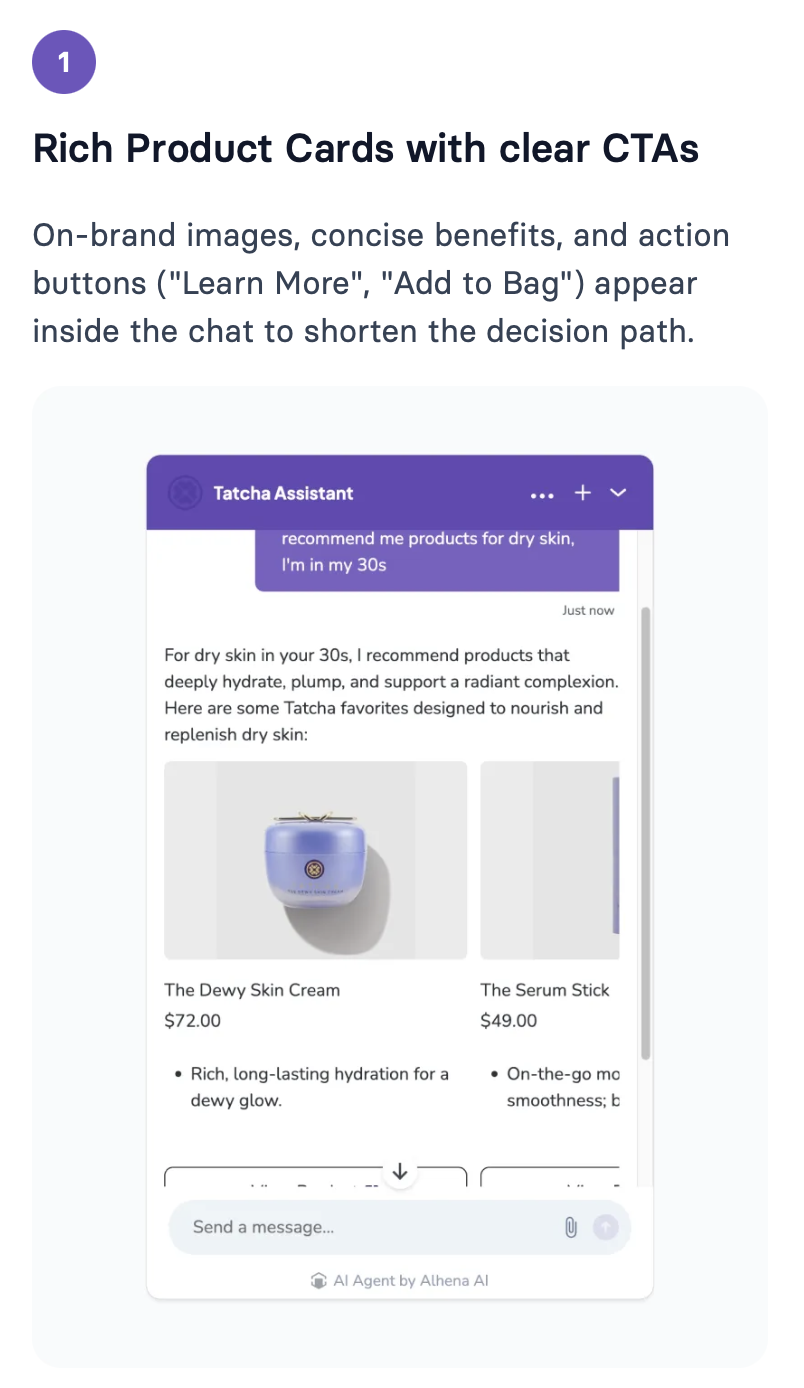
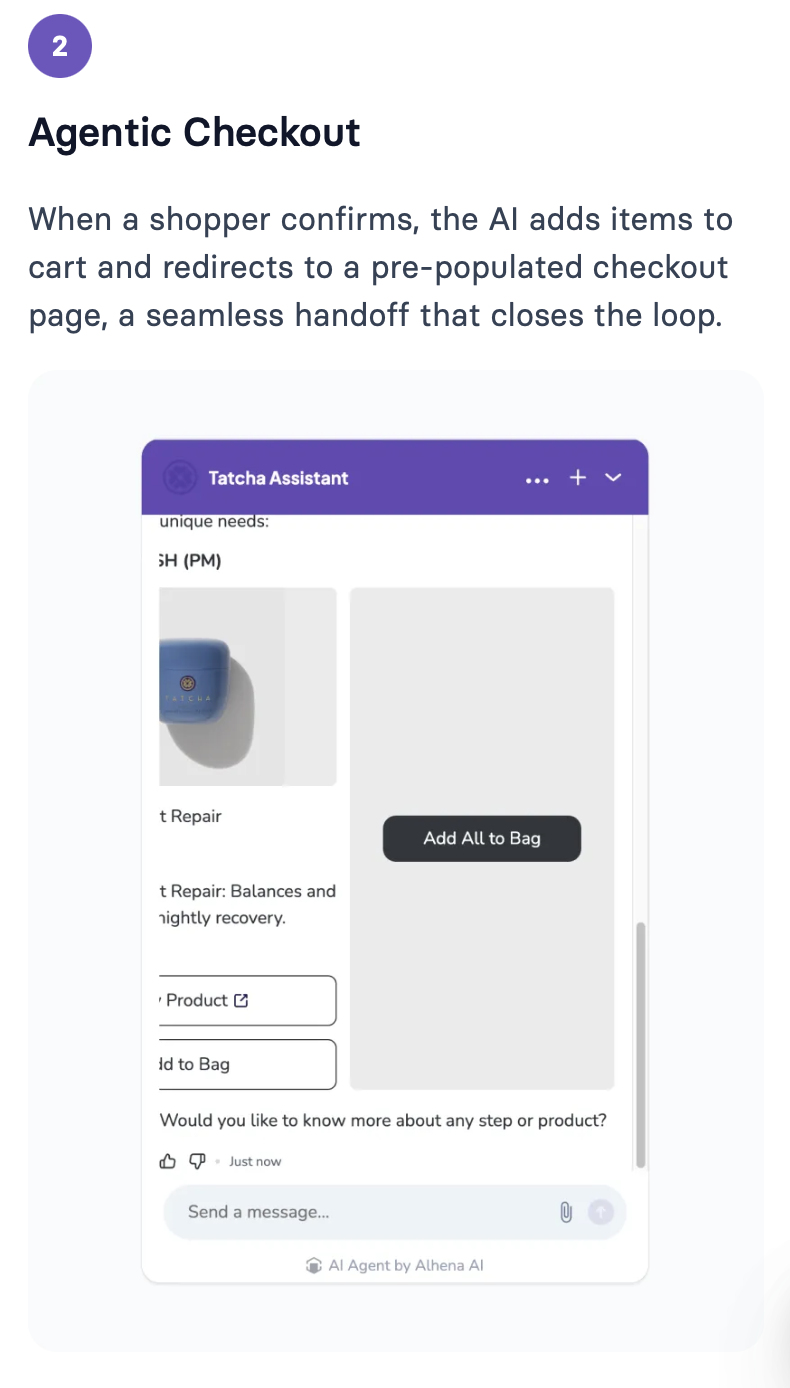
The TATCHA implementation did more than answer questions. It supported a luxury skincare journey: understand the shopper, build confidence, show product cards, then reduce purchase friction through a checkout handoff.
"preserving the Tatcha touch"
Jeremy Godin, Director of Client Engagement, quoted in Alhena's public case study.
What TATCHA launched
Technology and integration
Alhena Shopping AI with Routine Builder, Adaptive Quizzing, on-brand Product Cards, and Agentic Checkout.
Integrated with Salesforce Commerce Cloud and deep links to specific checkout pages.
Helpdesk integration moved from Gladly to Kustomer, with transfer to human agents when configured.
Dermalogica relevance
Dermalogica already has customer education, Face Mapping, specialist guidance, subscriptions, rewards, and support flows. A practical rollout can begin with safe support automation, then expand into guided product discovery where brand trust and escalation quality are proven.
The value model should test both sides of the equation: service efficiency from repeatable support and revenue assist from high-intent skincare guidance.
Executive validation